

What Is a Metering Pump?
A metering pump is a precision device used whenever exact quantities of a fluid need to be pumped into a process, with defined volume and timing.
Also known as controlled-volume pumps, they can be used not only as pumps but also as flow meters and/or control elements, solving a wide variety of challenges in chemical processing.
As final control elements, they can be electrically or pneumatically controlled by remote or automatic process-control instruments. Compared with conventional control valves, they offer superior linearity, accuracy, and operating range.
There are two main types of metering pumps: piston metering pumps and diaphragm metering pumps.
In this article, we will present the main differences between them.
Piston metering pumps
Piston Operating Principle
Piston metering pumps are positive displacement pumps that use a piston to displace fluid within the pumping chamber. The pumping chamber determines the flow rate and the amount of liquid to be delivered.
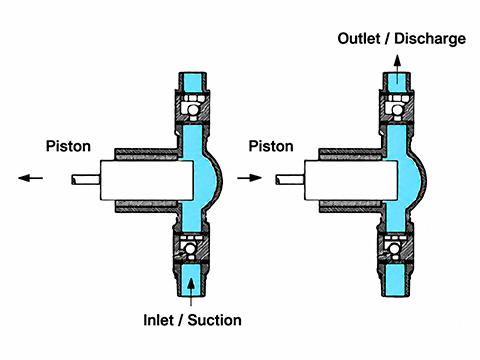
Figure 1 – Piston Suction and Discharge Motion
The fluid passes through the inlet and outlet check valves. When the piston retracts, a vacuum is created inside the pumping chamber, opening the inlet check valve and allowing the fluid to enter the chamber (see Figure 1).
Once the pumping chamber is full, the piston performs its discharge stroke and pushes the liquid out through the outlet check valve.
Applications of Piston Metering Pumps
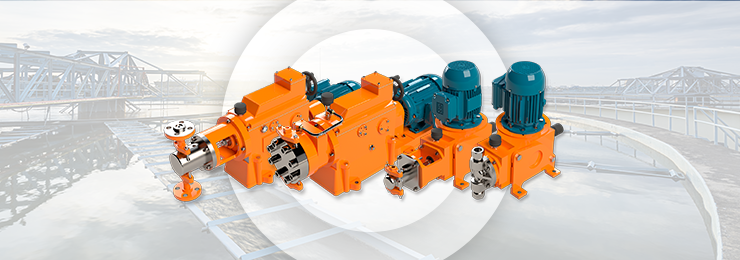
OMEL NSP/P metering pumps are piston metering pumps designed for use in severe chemical processes, such as pumping chemical slurries, viscous liquids, high-temperature fluids, and corrosive products.
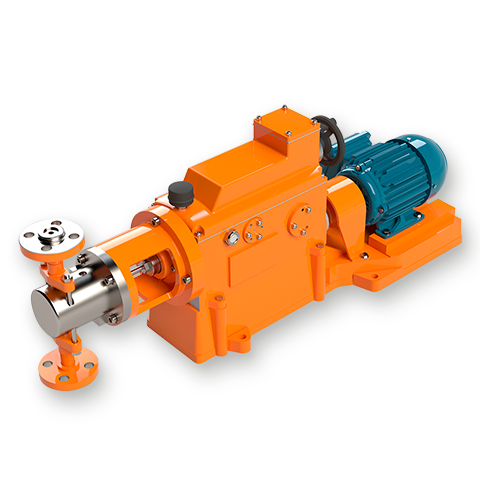
Figure 2 – OMEL NSP/P Metering Pump
Capable of generating high discharge pressures, piston metering pumps are ideal for applications that require elevated pressures, such as water treatment systems and offshore oil platforms, for example.
The DMP model is a compact, robust piston metering pump with a monoblock design that allows modular assembly of up to 6 heads.
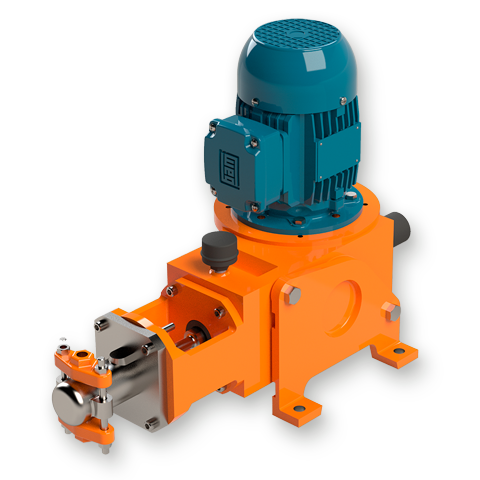
Figure 3 – OMEL DMP Metering Pump
Advantages of the OMEL NSP/P Metering Pump
- Pumping head supplied with single or double ball check valves;
- Can be equipped with disc- or cone-type check valves, with or without spring loading (optional);
- Higher performance due to the versatility of piston sealing materials, allowing the use of standard graphite-filled PTFE packing, PTFE “V” rings, or other materials according to the application requirements;
- Lubrication can be provided by the pumped liquid itself or by clean liquid from an external source, depending on the fluid being pumped.

Diaphragm Metering Pumps
Diaphragm Operating Principle
Diaphragm metering pumps are positive displacement pumps equipped with a diaphragm that is flexed and pressed to draw liquid into the pumping chamber and then discharge it.
With a diaphragm positioned between the fluid and the packing, these pumps are used for handling hazardous fluids in applications where even the smallest leakage cannot be tolerated.
Much like a piston pump, the movement of the diaphragm creates suction or vacuum to draw the fluid through the inlet valve. Once the chamber is full, the diaphragm forces the fluid through the outlet valve (see Figure 4).
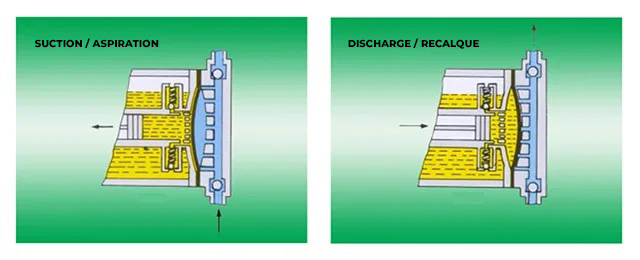
Figure 4 – Diaphragm Suction and Discharge Motion
Applications of Diaphragm Metering Pumps
OMEL NSP metering pumps are diaphragm metering pumps designed for applications in the chemical and petrochemical industries, food processing, sanitation, and the nuclear sector.
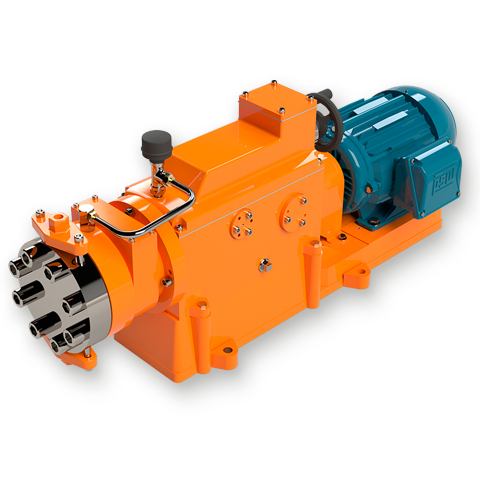
Figure 5 – OMEL NSP Metering Pump
Because the diaphragm can be manufactured in PTFE, the range of corrosive products that can be dosed becomes very broad.
The DMD model is a compact metering pump with a monoblock construction, featuring a mechanically actuated elastomeric diaphragm, a leak-tight dosing head, and a robust reduction mechanism.
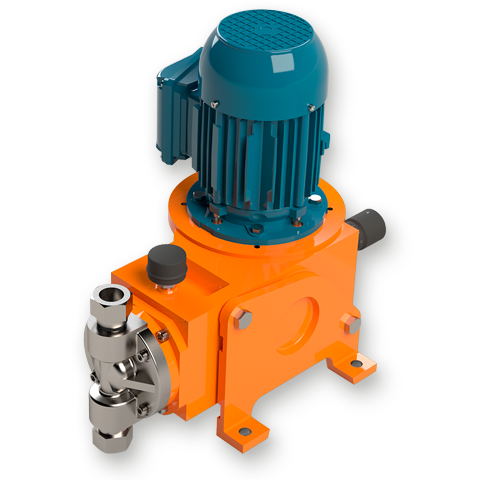
Figure 6 – OMEL DMP Metering Pump
Advantages of the OMEL NSP Metering Pump
- Precise dosing;
- Robust construction;
- Meets API 675 requirements;
- Single-diaphragm heads: suitable for standard applications;
- Double- or triple-diaphragm heads: designed for hazardous, flammable, or toxic liquids, or for applications requiring an additional protection system.
Piston vs. Diaphragm Metering Pumps
Accuracy
Both offer high dosing accuracy, but in some cases the piston model may be slightly less consistent than the diaphragm model, depending on the specific application.
Maintenance
Diaphragm pumps tend to require less maintenance compared to piston pumps, as they have fewer moving parts and are less prone to wear. The piston may require more frequent maintenance to ensure proper operation.
Safety
Because they are self-priming and feature an internal relief valve, diaphragm metering pumps provide leak-free operation and built-in pump protection, ensuring greater safety for both the process and operators.
Need Metering Pumps for Your Company?
Request a quote now!
OMEL has been designing, manufacturing, and distributing process pumps, blowers, valves, and rotameters for more than 70 years. Count on the confidence of being supported by a specialized sales team ready to provide fully personalized service focused on your application.