

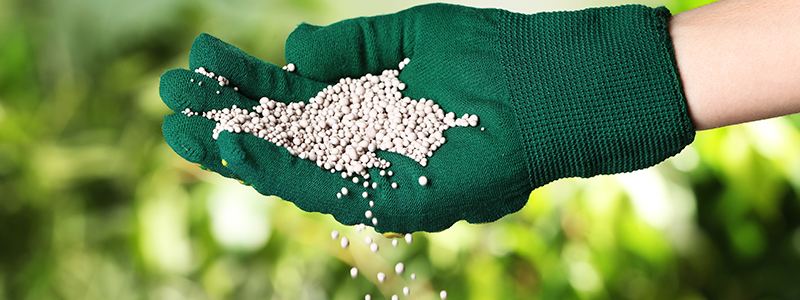
Few industrial sectors have such a direct impact on agricultural productivity as the fertilizer industry.
Every ton of urea, MAP, DAP, or NPK that reaches the field is the result of a sequence of demanding chemical operations involving concentrated acids, ammonia, abrasive suspensions, high temperatures, and products with a strong tendency to crystallize.
In this environment, the performance of fluid-handling equipment largely determines plant availability: a cavitating pump, an inaccurate metering pump, or a valve that fails to close properly on solids can quickly lead to production losses and higher maintenance costs.
The Market and Its Processes
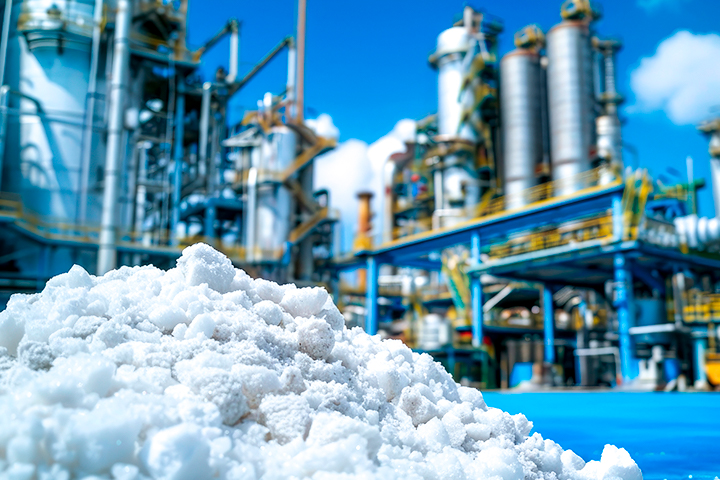
The fertilizer industry encompasses different process routes, but they share common challenges. In urea plants, ammonia reacts with CO2 under high pressure, and the resulting solution is concentrated by vacuum evaporation before granulation. In MAP and DAP units, phosphoric acid reacts with ammonia, forming phosphate slurries that are then sent to granulation and drying. NPK blending plants, in turn, combine solid and liquid raw materials, with the dosing of additives, to produce granules with controlled composition.
Nitrate, phosphate fertilizer, and organomineral routes complete the picture, all sharing the same set of operations: transfer of liquids and solutions, pumping of slurries, reagent dosing, vacuum generation, pneumatic conveying of solids, and effluent treatment.
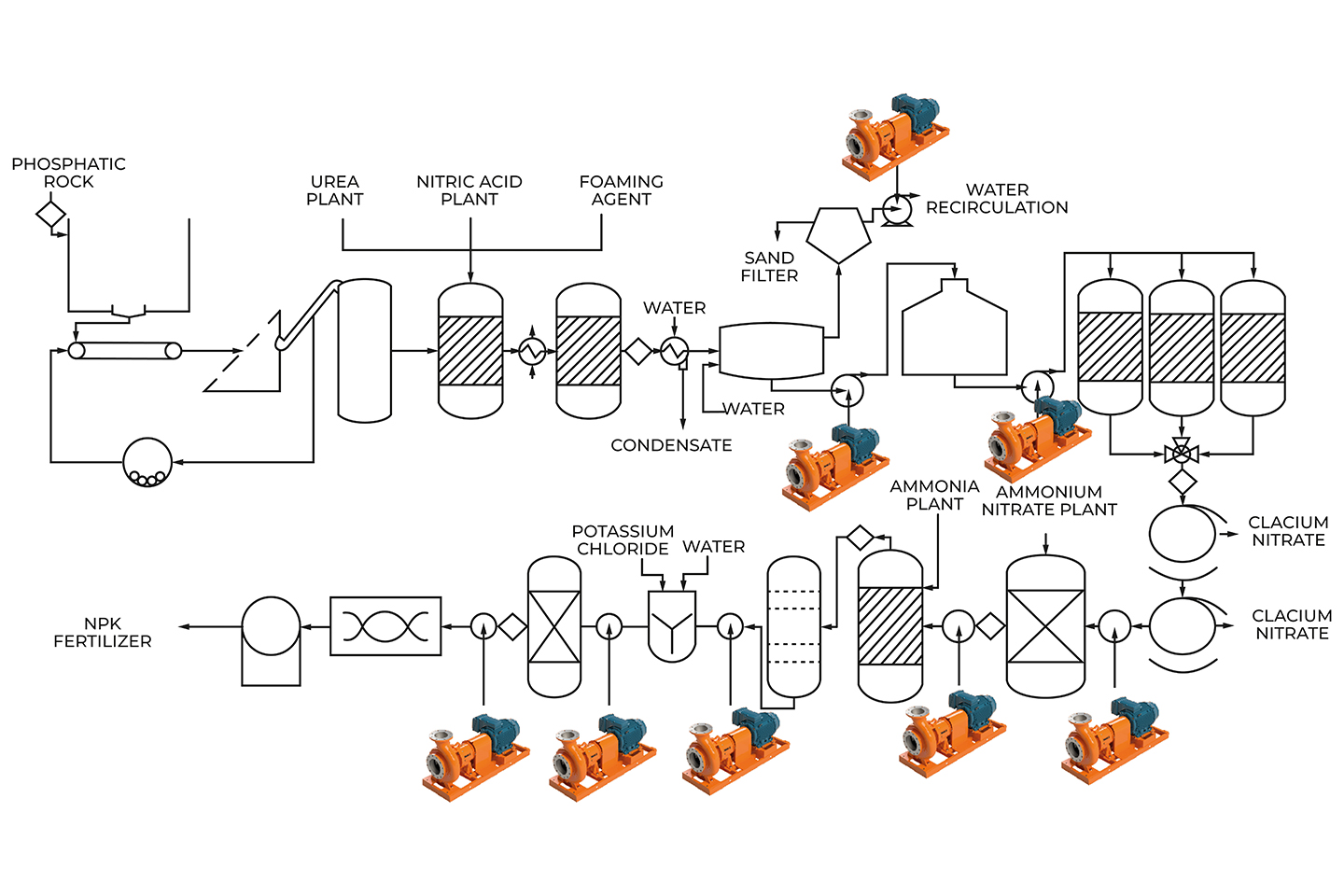
It is precisely within this set of operations that the OMEL portfolio fits in, with process centrifugal pumps, vortex pumps for solids-laden fluids, metering pumps, liquid ring vacuum pumps, Roots blowers, and pinch valves. Below, we present the main process stages and the equipment recommended for each one.
Transfer of Process Liquids and Solutions
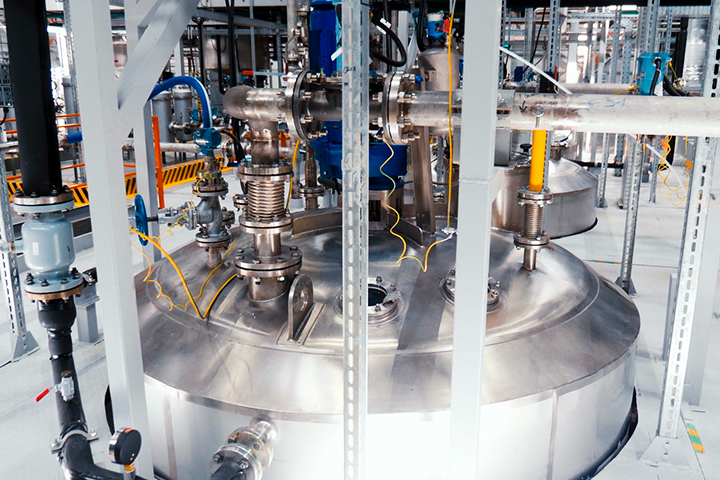
The most common operation in any fertilizer production route is liquid transfer: loading and unloading sulfuric and phosphoric acid, ammonia circulation, handling urea and nitrate solutions, condensate, cooling water, and process liquors. These are continuous-duty services, often involving hot and corrosive fluids, in which pump reliability directly determines plant availability.
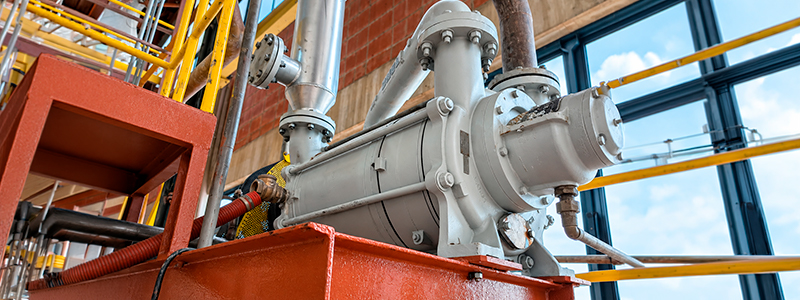
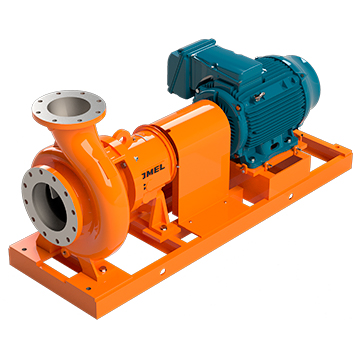
For these applications, OMEL offers the UND/III process centrifugal pumps, fully manufactured in accordance with ANSI/ASME B73.1.
The line covers capacities up to 1,700 [m³/h], heads up to 210 [m], pressures up to 26 [bar], and temperatures from -100 [°C] to 260 [°C], with special constructions available for temperatures up to 350 [°C].
The track record of the line includes typical services in this market, such as pumping urea, ammonia, acids, and organic and inorganic products in the chemical industry, as well as acid recovery and recirculation and gas scrubbing applications.
The wide range of available construction materials allows each pump to be selected according to the fluid’s corrosiveness and operating temperature.

Slurries and Solids-Laden Fluids
A significant portion of the fluids handled in a fertilizer plant are not clean. Liquors containing suspended crystals and various other products carry abrasive solids that can rapidly damage conventional centrifugal pumps, in which the entire flow passes through the impeller.
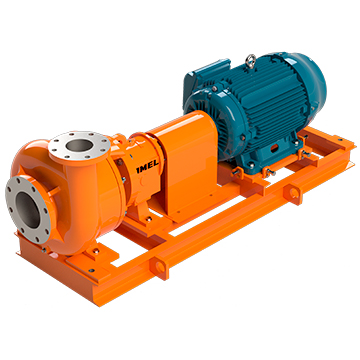
This is where OMEL UND/III-VR vortex pumps with recessed impellers come into play. Because the impeller is positioned completely outside the main flow path, most solid particles are discharged without even coming into contact with it. The vortex created inside the volute provides the main pumping force, ensuring minimal degradation of both the fluid and the impeller itself.
Theoretically, the pump can handle solids up to the size of the discharge nozzle, and the line covers capacities of approximately 1,200 [m³/h] and heads up to 75 [m] at 1,750 [rpm], with other operating speeds available upon request.
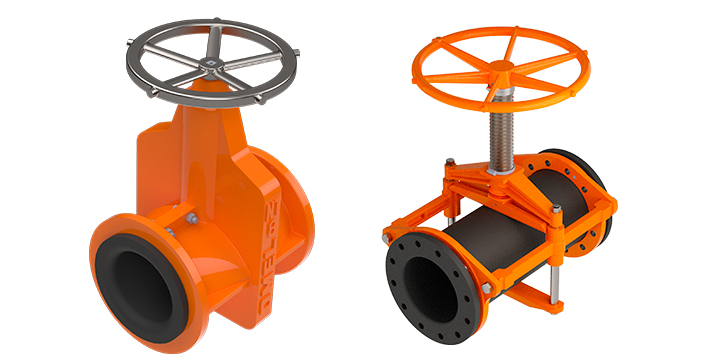
In pipelines handling these same fluids and even thicker slurries, flow shutoff requires a solution that is equally tolerant of solids. OMEL Series NT pinch valves, featuring a tubular diaphragm, control flow through the simple compression of a flexible rubber sleeve. The passage is full bore, with virtually no pressure loss or material buildup, and shutoff remains complete even when solid particles are caught in the valve, as the sleeve simply closes around them.
The sleeve itself is the only wear component and can be replaced quickly, significantly reducing maintenance requirements in applications involving ores, powders, and heavy slurries.

Dosing of Reagents and Additives
The quality of fertilizer granules depends on precise dosing throughout the entire process: anti-caking and coating agents at the granulation outlet, antifoaming agents and scale inhibitors in evaporators, neutralizing reagents, process additives, and chemicals used in wastewater treatment systems.
Overdosing means unnecessary chemical costs, while underdosing can compromise product specifications or equipment protection.
For routine industrial dosing applications, OMEL DMD mechanically actuated diaphragm metering pumps cover flow rates from 0 to 1,140 [L/h], with discharge pressures up to 10 [bar] and repeatability of ±3%.
With a robust monoblock design, they can be configured with up to six heads operating in parallel, each with independent adjustment through a micrometer screw, whether the pump is stopped or running, as well as remote flow control via a frequency inverter.
They differ from solenoid-type electronic metering pumps precisely because they are designed to withstand severe industrial environments.
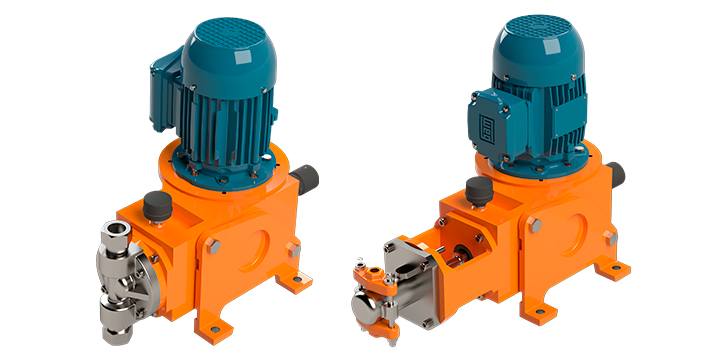

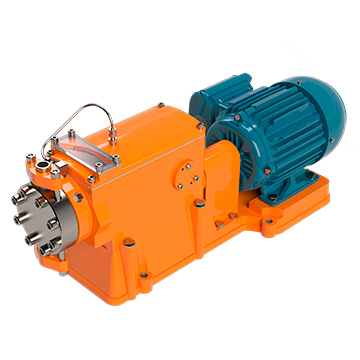
When the process requires instrument-grade precision, OMEL NSP hydraulically actuated diaphragm metering pumps provide linear dosing from 10% to 100% of capacity, with a maximum error of 1%. They can also operate as final control elements, with either electric or pneumatic actuation.
The line reaches capacities of up to 5,500 [L/h] and, with metallic heads, discharge pressures of up to 340 [bar], making it suitable for chemical slurries as well as viscous, corrosive, and toxic liquids.
Vacuum for Concentration, Evaporation, and Vapor Recovery
Solution concentration is a key stage in both urea and phosphoric acid production routes.
Evaporation under vacuum lowers the boiling temperature, reduces energy consumption, and helps protect products that are sensitive to thermal decomposition.
In addition to evaporators, vacuum is also used in filters at phosphoric acid units and in process vapor recovery, helping prevent emissions and ammonia losses.
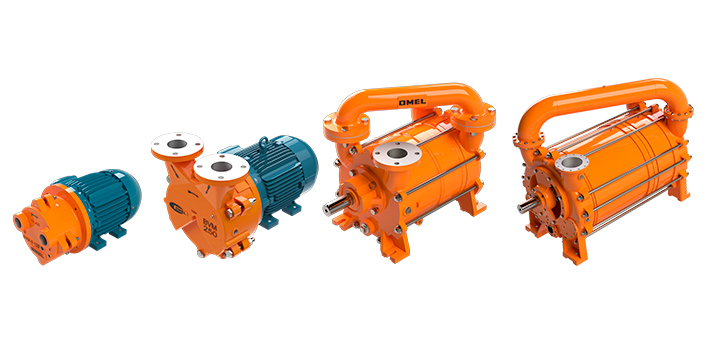
OMEL liquid ring vacuum pumps are suitable for these applications, with capacities ranging from 30 to 750 [m³/h] and vacuum levels down to 40 [mbar] (-730 mmHg) without the use of ejectors, with deeper vacuum levels achievable when combined with ejectors.
Due to their operating principle, they are completely oil-free and are insensitive to impurities or small foreign particles drawn into the pump. Vapors and entrained liquids are simply sucked in and discharged, a condition commonly found in fertilizer plant evaporators.
For aggressive fluids, the pumps can be supplied entirely in AISI 304 or 316 stainless steel, or in other corrosion-resistant alloys upon request.

Pneumatic Conveying, Fluidization, and Wastewater Treatment Aeration
After granulation, the fertilizer becomes a bulk solid that needs to be conveyed, dried, and cooled.
Pneumatic conveying of granules and powders, fluidization of drying and cooling beds, and the supply of process air depend on reliable, oil-free air sources, since any contamination can compromise the product.
The same need for air appears at the end of the process, in the biological aeration of the wastewater treatment plant.
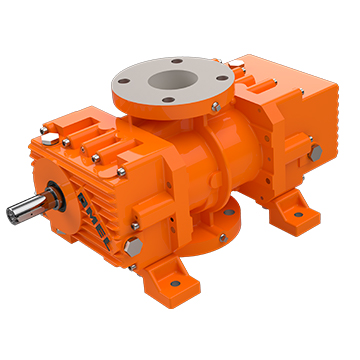
OMEL SRT Roots blowers operate at pressures of up to 1 [bar] gauge or generate vacuum down to 500 [mbar], with capacity remaining practically constant despite variations in system pressure, an essential characteristic in pneumatic conveying, where pressure drop changes according to the solids load in the pipeline.
The trilobe rotor profile reduces pulsation by one third and noise by approximately 5 [dB(A)] compared with bilobe rotors, while the generated airflow is completely oil-free.
These are precisely the established applications of the line: pneumatic conveying of bulk materials, fluidization, process air supply, and aeration in water and wastewater treatment.

Equipment Selection Considerations
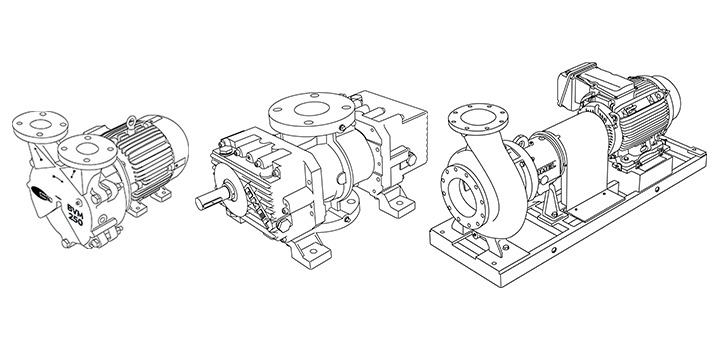
The applications presented in this article represent potential uses, and the correct selection of each piece of equipment depends on flow rate, pressure or vacuum level, temperature, density and viscosity, fluid composition, presence and size of solids, corrosiveness, tendency to crystallize, suction conditions, construction materials, operating regime, and the standards required by the project.
For this reason, final sizing should always be validated by OMEL Engineering, which analyzes the actual process conditions before defining the equipment specification.
Conclusion
From acid unloading to wastewater treatment aeration, including vacuum concentration, additive dosing, and granule conveying, the fertilizer industry subjects equipment to demanding conditions involving corrosion, abrasion, solids, crystallization, and high temperatures.
With more than 74 years of experience in industrial pumping, OMEL brings together, from a single supplier, UND/III and UND/III-VR centrifugal pumps, DMD and NSP metering pumps, BVM vacuum pumps, SRT blowers, and NT pinch valves, covering the main stages in the production of urea, MAP, DAP, NPK, and other fertilizer process routes.
More than the product portfolio itself, it is OMEL’s application engineering expertise that ensures each piece of equipment is properly selected to deliver reliable performance under the actual operating conditions of the plant.
Need Help?
Talk to our engineering team about your application.