

The Food and Beverage industry operates under simultaneous demands for productivity, quality, repeatability, and environmental compliance. Behind every box of pasta, bottle of beer, or package of powdered milk, there is a network of auxiliary equipment that generates vacuum, blows air, measures flow rates, and doses additives.
When one of these systems fails, the impact is reflected in the product, production line efficiency, and maintenance costs.
The market and its unit operations
Dairy products, baking, pasta, confectionery, breweries, soft drinks, juices, vegetable oils, sugar, and meat processing may seem like distant segments, but they share a common core of operations: separation, concentration, mixing, dosing, raw material transport, and effluent treatment.
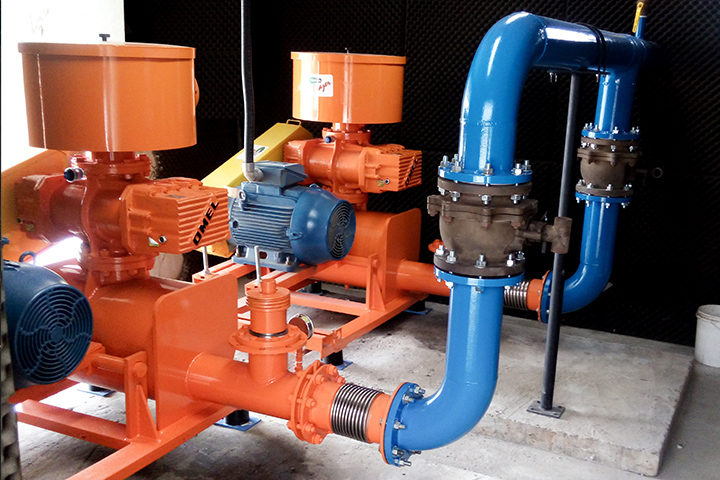
It is within this core that OMEL equipment comes into play: vacuum pumps in concentrators and deaerators, Roots blowers in pneumatic conveying, air injection in fermenters and aeration of effluent lagoons, rotameters for local flow indication, and metering pumps for additives.
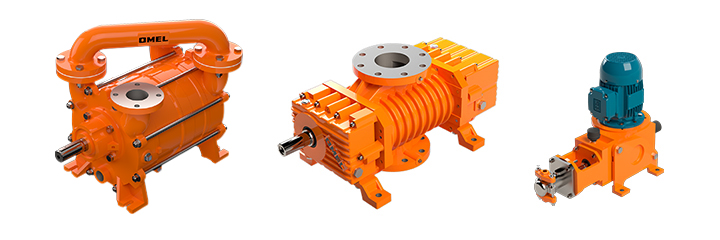
Concentrators
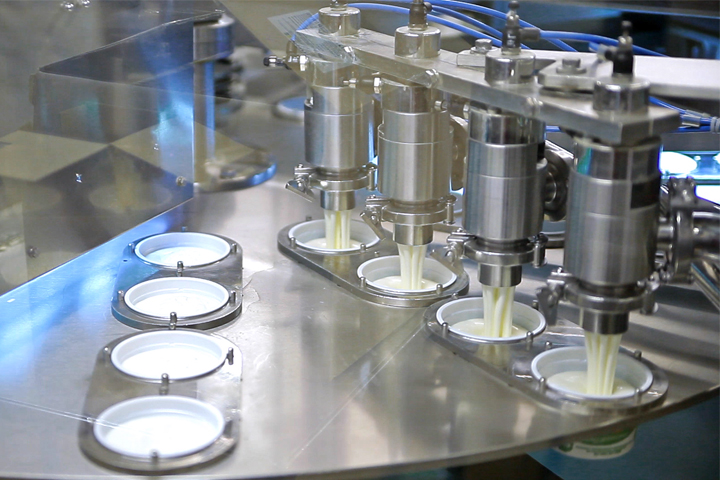
Concentrators are used in the production of condensed milk, powdered milk, concentrated juices, fruit pulps, extracts, and syrups.
Evaporating water at 100 °C would damage aroma, color, and nutrients. The solution is to carry out the process under vacuum, which proportionally reduces the temperature. For example, at a pressure of 500 [mbar abs], water evaporates at 81 °C, while at 300 [mbar abs], evaporation occurs at 69 °C, and so on.
Variations in pressure translate into temperature variations, which cause protein denaturation, Maillard browning (a thermal reaction between sugars and amino acids that darkens the product), and aroma loss.
OMEL BVM, BLA, and LRVP liquid ring vacuum pumps serve this application with flow rates from 30 to 750 [m³/h] and final vacuum levels of 40 [mbar] absolute.
When the application involves suction of corrosive vapors, such as citrus products, they can be supplied entirely in AISI 304 or 316 stainless steel.
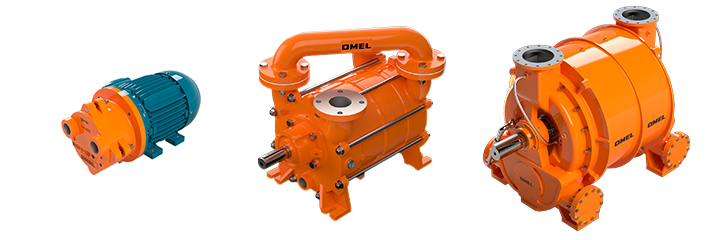

Deaeration in the pasta, candy, and confectionery industry
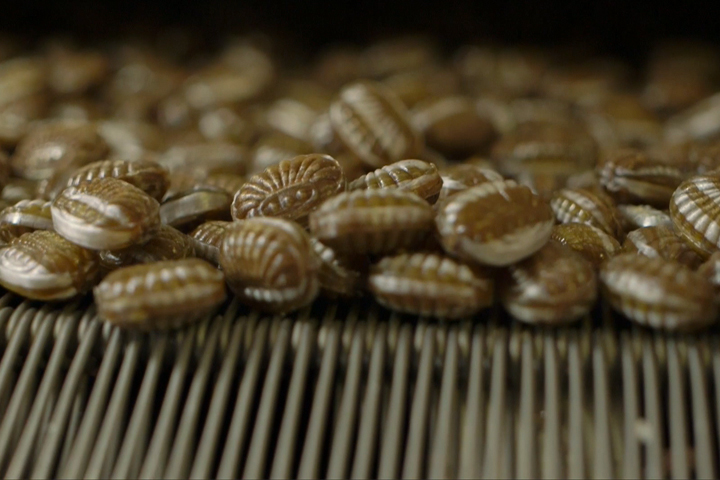
Extruded pasta, candies, gummies, dulce de leche, caramels, and creamy fillings pass through deaeration chambers before molding or extrusion to remove dissolved air from the mass.
Without this stage, internal bubbles, opacity, streaks, phase separation, and dimensional variation may occur.
The operation requires stable vacuum and tolerance to carryover conditions, requirements met by any OMEL vacuum pump. For applications that need to go below 40 [mbar], which is common in the deaeration of denser masses and in packaging vacuum systems, OMEL can provide a customized engineering solution.
Pneumatic conveying of powders and grains
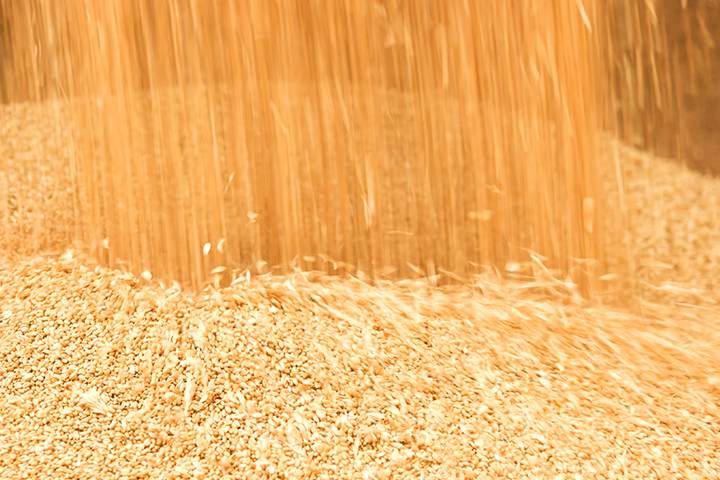
In flour mills and plants producing animal feed, powdered milk, refined sugar, cocoa, instant coffee, and sweeteners, bulk raw materials are transported through pipelines in an air stream, either under positive pressure (push system) or vacuum (pull system).
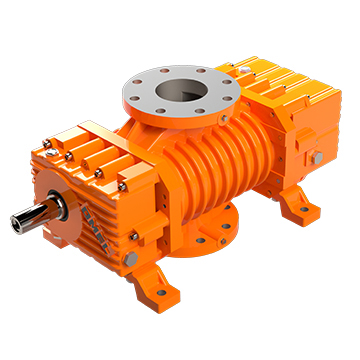
The system only works if the air generator delivers stable flow within a narrow range. OMEL SRT Oil-Free Roots blowers (providing completely oil-free air), with trilobe profile, meet this application with virtually constant flow even under pressure variations in the line, operating up to 1 [bar] gauge pressure or vacuum up to 500 [mbar].
The air is completely oil-free, a non-negotiable sanitary requirement, and the pulsation reduced by 1/3 compared to bilobe profiles translates into lower stress on piping and filtration elements.

Air injection in fermenters
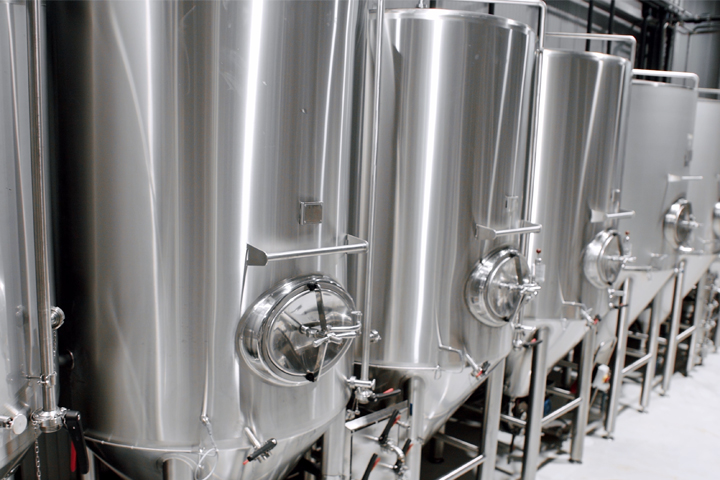
Aerobic fermentation of baker’s yeast, citric acid, lactic acid, vinegar, industrial enzymes, yeasts, and brewery yeast propagation depends on dissolved oxygen in the medium.
The oxygen transfer rate from gas to liquid (kLa) is directly related to the injected air flow rate, discharge pressure, and diffuser design. Undersizing restricts microbial growth, while oversizing wastes energy.
SRT Roots blowers deliver constant flow even when the liquid column pressure fluctuates throughout the batch (variations in level, medium viscosity, and pressure drop in the diffusers), and the injected air is completely oil-free, an essential condition to prevent contamination of the fermentation medium.
Aeration of effluent lagoons
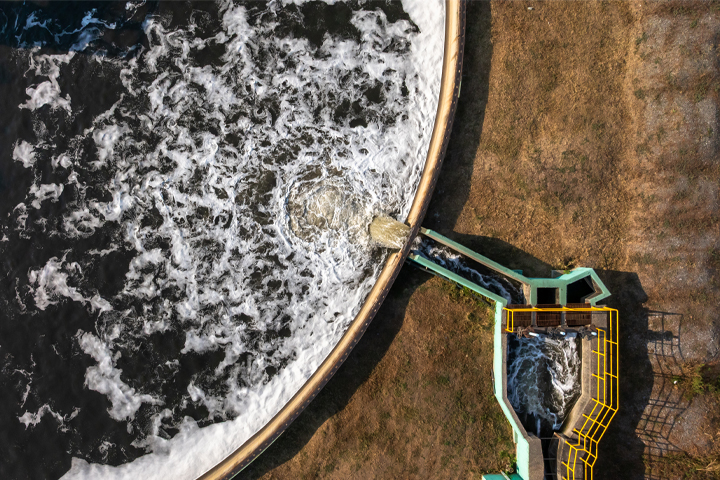
Food and Beverage plants generate effluents with high organic load, measured by BOD (Biochemical Oxygen Demand, biodegradable fraction) and COD (Chemical Oxygen Demand, total oxidizable organic matter).
The usual treatment is aerobic biological treatment, in aerated lagoons, activated sludge systems, or MBBR (Moving Bed Biofilm Reactor), and it depends on air injection at the bottom of the tank.
SRT Roots blowers are typically specified because the pressure required to overcome the liquid column (300 to 700 [mbar]) falls exactly within their operating range, with completely oil-free air. They operate continuously with a frequency inverter, adjusting the flow rate to the actual load of the WWTP (Wastewater Treatment Plant), reducing electrical consumption during periods of lower demand.
Rotameters for local utility measurement
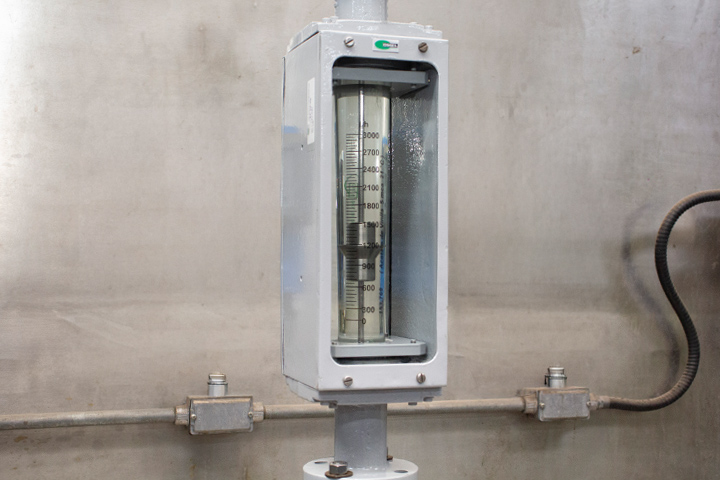
In a Food and Beverage plant, there are dozens of points where local flow indication is required without the need for electronic transmission: process water, steam, chilled water, natural gas or LPG (liquefied petroleum gas), compressed air, nitrogen, carbon dioxide, and cleaning chemicals.
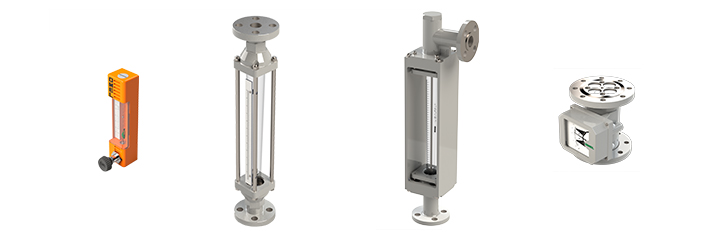
The OMEL rotameter line serves applications in liquids and gases with floats sized and calibrated for each application, providing greater accuracy and practicality to the user.
Whether for high or low flow rates, OMEL has the right rotameter for the application.
Metering pumps for additives
Dosing of caustic soda, nitric or phosphoric acid, hypochlorite or peroxide for sanitization, antifoaming agents, stabilizers, and citric acid in process lines, pH correction in WWTPs, and coagulant dosing in water reuse treatment are operations that require repeatable flow rates even with pressure variations in the line.
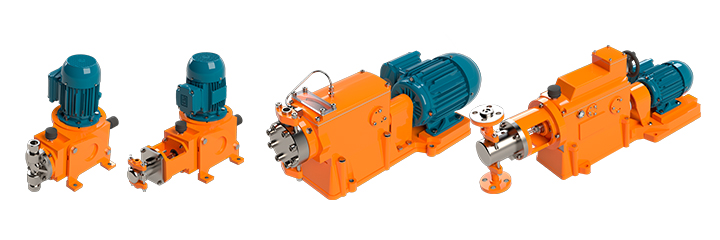
OMEL DMD and NSP metering pumps, with mechanically/hydraulically actuated diaphragms, cover flow rates from 0 to 5,500 [L/h], pressures up to 204 [bar(g)], and repeatability of ±3%.
Capacity adjustment can be carried out with the pump stopped or in operation, and the motor can be driven by a frequency inverter for remote control.
For dosing applications, OMEL also supplies the DMP and NSP/P pumps with driven piston technology and flow rates up to 33,600 [L/h], pressure upon request.

Conclusion
The Food and Beverage industry requires auxiliary equipment that combines precision and robustness for continuous operation.
BVM vacuum pumps serve concentrators and deaerators, while SRT “Roots” type blowers cover pneumatic conveying, fermentation, and effluent aeration. Rotameters provide local utility flow indication, and DMD, DMP, NSP, and NSP/P metering pumps deliver repeatable dosing of additives and cleaning products.
Together, they cover the critical points of the process, from raw material intake to effluent treatment.
Need Help?
To learn more about the various vacuum pump, blower, metering pump, and rotameter solutions best suited for your industrial application.